Ad Fraud Prevention: How to Detect and Stop Invalid Traffic
How bots, click spam, click injection and SDK spoofing work — and the layered ad fraud prevention steps that keep your budget on real people.

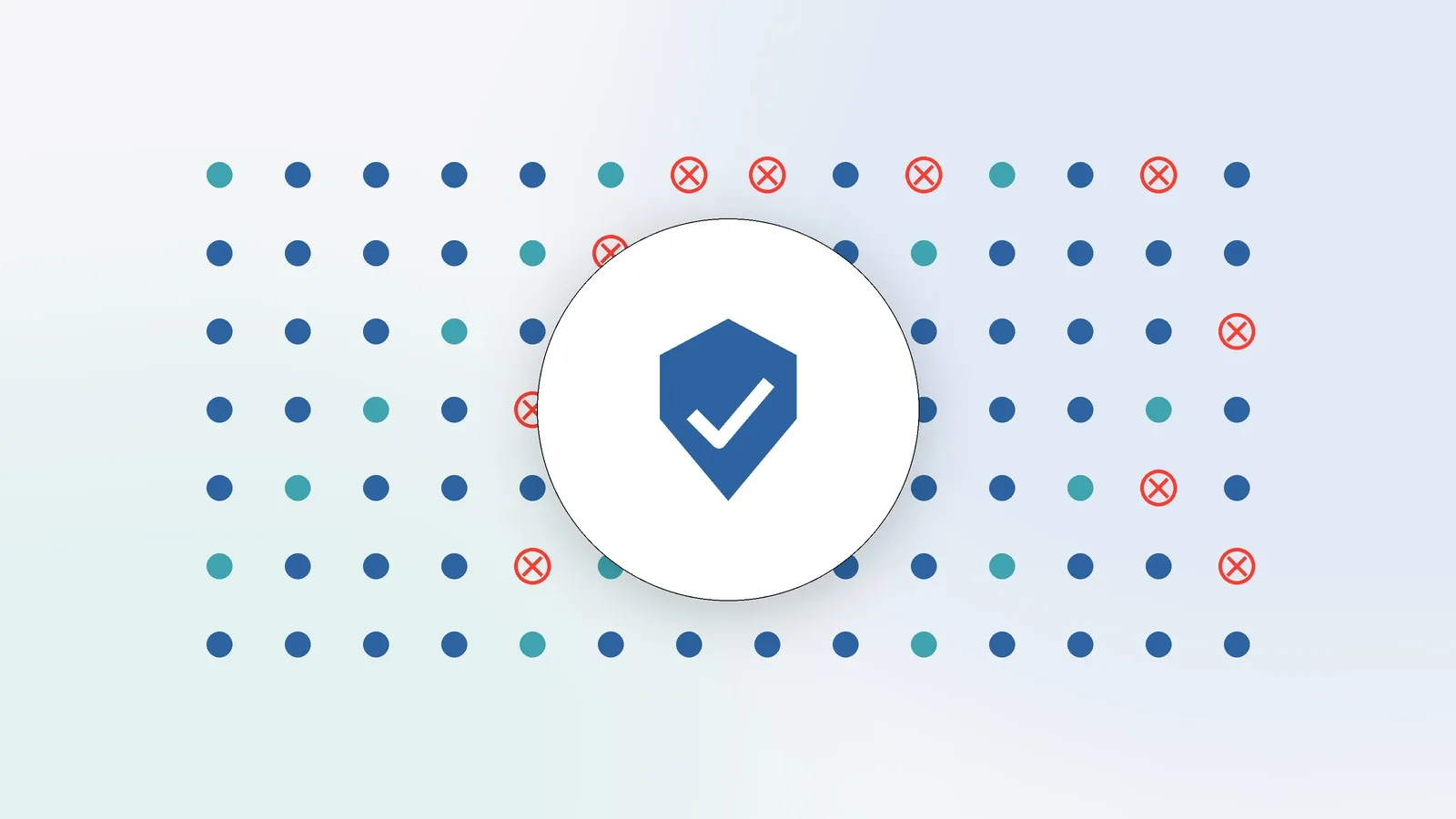
Every advertising budget leaks a little. Some of the leak is ordinary inefficiency — the wrong audience, a tired creative. But a share of it goes to traffic that was never human in the first place: bots, fake installs and stolen attribution. That money does not just disappear; it also pollutes the data you use to make every other decision.
This guide explains how ad fraud works, the warning signs to look for in your reports, and a layered ad fraud prevention framework that keeps spend focused on real people.
What is invalid traffic?
Invalid traffic (IVT) is any ad impression, click, install or conversion that does not come from a genuine user with real interest. Industry standards split it into two groups:
- General invalid traffic (GIVT) — traffic that can be identified with routine filtering, such as known data-centre IP addresses, declared crawlers and spiders, and activity from known bot lists.
- Sophisticated invalid traffic (SIVT) — traffic designed to look human and evade simple filters: hijacked devices, emulators and device farms, cookie stuffing, manipulated attribution and malware-driven activity. Detecting it needs deeper analysis.
Not all invalid traffic is malicious — a search engine crawler is not trying to steal anything — but none of it should be paid for.
The most common types of ad fraud
Bots and data-centre traffic
Automated scripts load pages, view ads and click on them. Simple bots run from servers in data centres; more advanced ones imitate mouse movement, scrolling and realistic browsing patterns.
Domain and app spoofing
Low-quality inventory is misrepresented as a premium website or app so that it can be sold at a higher price. The industry’s ads.txt, app-ads.txt and sellers.json standards exist so that buyers can check who is authorized to sell a publisher’s inventory.
Click spamming
Fraudsters fire large numbers of clicks on behalf of users who never saw or tapped an ad, hoping to be credited for installs that would have happened anyway. It steals credit from organic installs and from honest partners.
Click injection
A malicious app on the device detects when another app is being installed and fires a click just before the install completes, so that it wins the attribution. The result is a burst of installs with suspiciously short click-to-install times.
SDK spoofing
Instead of generating fake devices, fraudsters send fake install and event messages directly to measurement servers, imitating a real app’s SDK. No device is involved at all.
Device farms and install farms
Racks of real phones — or emulators that pretend to be phones — install apps, perform scripted actions and reset their identifiers to repeat the process.
Ad stacking and pixel stuffing
Several ads are layered on top of each other, or squeezed into a 1×1 pixel frame, so impressions are counted although no one could possibly see them.
Warning signs in your data
Fraud usually leaves fingerprints in reporting long before anyone names it. Review these regularly, by source:
- Unusual click-to-install times. A cluster of installs within seconds of the click points to click injection; a long, flat distribution with no peak points to click spamming.
- Very high click-through rates with very low conversion. Real users rarely click at extreme rates and then never convert.
- No post-install activity. Installs that never open the app twice, never register and never generate an event.
- Odd timing. Conversions arriving at perfectly regular intervals or in spikes at unusual hours for the target market.
- Geography and device mismatches. IP locations that do not match the targeted country, or traffic concentrated on a handful of device models and OS versions.
- Too-good-to-be-true pricing. Volume far above what a source should be able to deliver, at a price far below the market.
Fraud is rarely visible in blended averages. It hides inside individual sources — which is why source-level reporting is the foundation of every defence.
A layered ad fraud prevention framework
No single tool catches everything. Effective protection stacks several layers, so that what slips past one is caught by the next.
Layer 1: before the bid
- Buy from supply paths you can verify, and check ads.txt, app-ads.txt and sellers.json.
- Filter known bots, data-centre traffic and suspicious devices pre-bid.
- Maintain block lists of domains, apps and sources with a poor quality history.
Layer 2: while the campaign runs
- Monitor sources continuously for anomalies in click volume, conversion timing and geography.
- Apply velocity and frequency rules that cap implausible behaviour.
- Pause outliers automatically and review them before they consume budget.
Layer 3: after the install or conversion
- Use your measurement partner’s fraud tools and review rejected attributions.
- Validate conversions against downstream quality signals: retention, activation, verified registrations and deposits.
- Remove invalid activity from billing before invoices are settled.
Layer 4: commercial protection
- Pay on validated, deeper-funnel events where possible.
- Agree in writing that fraudulent traffic is non-billable, with clear clawback terms.
- Require transparent reporting by source, placement and creative.
How your pricing model affects fraud risk
The event you pay for changes the incentives for fraudsters:
- Impressions and clicks are the easiest events to fake, so they carry the most exposure.
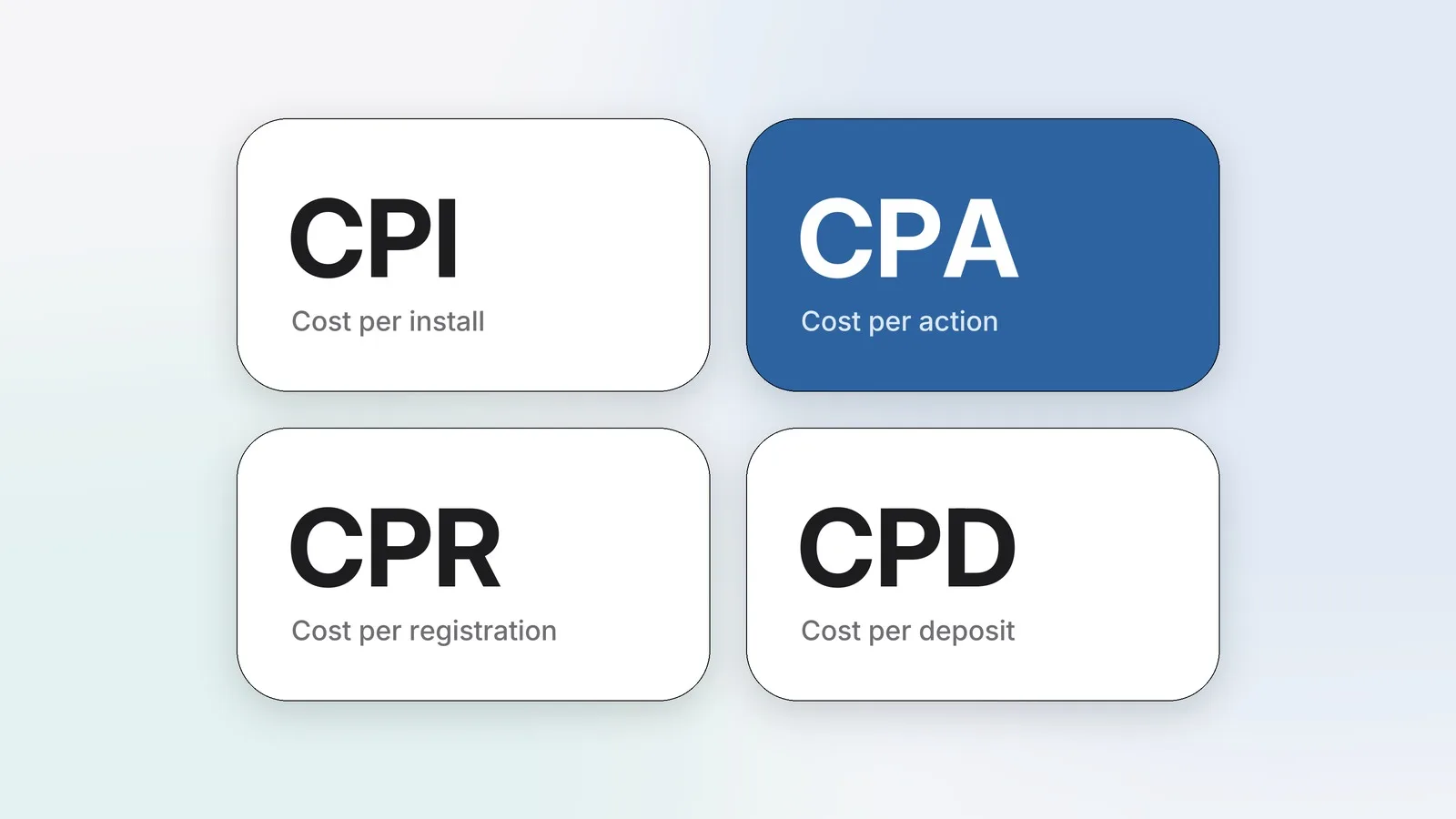
- Installs (CPI) are targeted by click spamming, click injection, SDK spoofing and device farms.
- Registrations, actions and deposits (CPR, CPA, CPD) are much harder to fake at scale, especially when they require verification — but fake sign-ups still exist, so verification matters.
Paying deeper in the funnel is one of the most effective fraud defences available. Our comparison of CPI, CPA, CPR and CPD explains how to move toward those events as your tracking matures. You can also see how pre-bid filtering affects a single auction in our interactive programmatic auction demo.
A quick ad fraud prevention checklist
- Measurement partner integrated, with fraud protection switched on.
- Key in-app events tracked and passed back to partners.
- Source-level reporting reviewed at least weekly.
- Click-to-install time and post-install activity monitored by source.
- Supply verified with ads.txt, app-ads.txt and sellers.json.
- Quality guardrails and non-billable fraud terms in every agreement.
- Suspicious sources paused quickly and reviewed before reactivation.
Frequently asked questions
How common is ad fraud?
It varies widely by channel, market and supply source, which is exactly why blanket estimates are not very useful. What matters for your budget is the invalid rate in your sources — something you can only see with source-level measurement.
What is the difference between GIVT and SIVT?
General invalid traffic is identified with routine filters such as known bot lists and data-centre IP ranges. Sophisticated invalid traffic is designed to look human and needs advanced analysis to detect.
Can fraud happen on CPA campaigns?
Yes, but it is much harder. Deeper events require more effort to fake, and verification steps such as email confirmation or identity checks make large-scale fraud uneconomical.
Who is responsible for preventing ad fraud?
Everyone in the chain plays a part — advertisers, agencies, media partners, exchanges and publishers. In practice, choose partners who filter traffic before the bid, monitor it during the campaign and remove invalid activity from billing.
Keep every dollar on real people
Fraud prevention is built into every SkyPlay Media campaign: pre-bid filtering, continuous anomaly monitoring, post-conversion validation and transparent, source-level reporting. Talk to our team about protecting your next campaign.
SkyPlay Media is a results-driven performance marketing and ad-tech company helping advertisers and app developers grow through data-driven user acquisition and retention.
Let’s build growth, powered by performance.
Talk to a specialist about your goals — we reply within one business day.